On the night of Mar 09/10, 2026, under good conditions, I acquired images of the WASP 149 system during a transit by its exoplanet 'b'. It was a good test for the projects some of the students in our Observational Astronomy class will do over the next month.
Tonight was clear and dark. Very good conditions, There were two interruptions of the observations, one due to my own carelessness and the other due to a mysterious crash of MaximDL.
WASP 149 has a transiting exoplanet; see
The important point is that the transits have a large amplitude -- about 0.017 mag -- and both a short period (1.33 days) and duration (about 2 hours). That makes them easy to detect with our equipment. The declination of -8 degrees is a bit farther South than I'd prefer, so the system is always a bit low in the sky, but it's still a good one for some practice.
These observations involved:
Notes from the night:
The first interruption in the measurements, at the time of ingress, was due to my own carelessness. I paused the main camera sequence so that I could re-set the guider to re-center the guide star, and then forgot to switch MaximDL back to the main camera's control panel and re-start the sequence. MaximDL continued to show action on the guider, which worked very well all night, so I was lulled into thinking that data was still being acquired with the main camera. Argh!
Now, during this procedure, I was running a script to look for new images and process them automatically, updating a quick-and-dirty light curve of the target. That script was creating a long string of messages under normal operation as it looked for new images, so it wasn't obvious that there were no new images being processed. I've modified the script to decrease the debug level, so that its output now shows clearly when new images have (or have not) arrived. That should help me to avoid similar problems in the future.
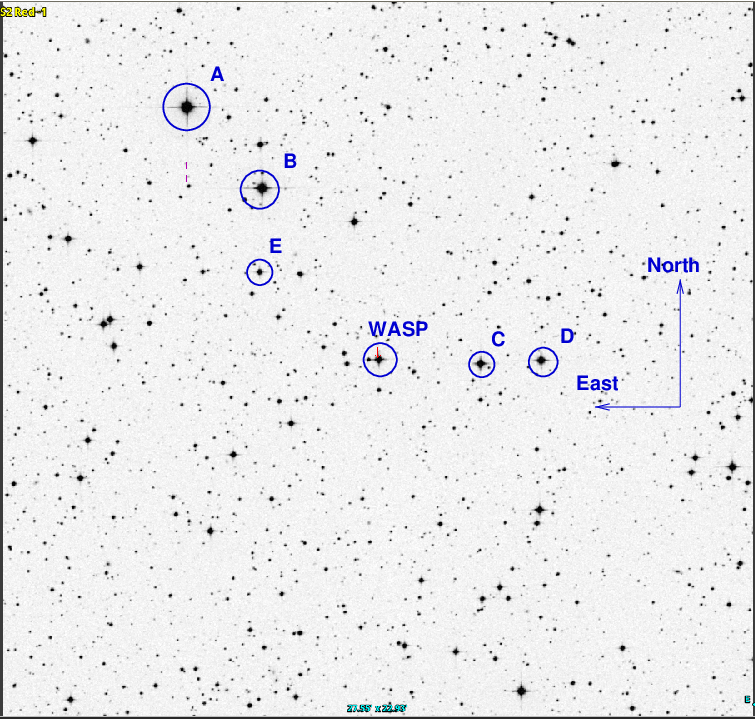
The picture below shows an image of the field of WASP 149 from the DSS2 Red plates. The field of view is about 27 arcminutes wide.
I've marked the location of several comparison stars.
  star       name          B         V
------------------------------------------------------
    A                     9.38      8.99
    TYC 5426-1804-1      11.067    10.070
    TYC 5426-1036-1      12.54     11.82
--------------------------------------------------------------------------
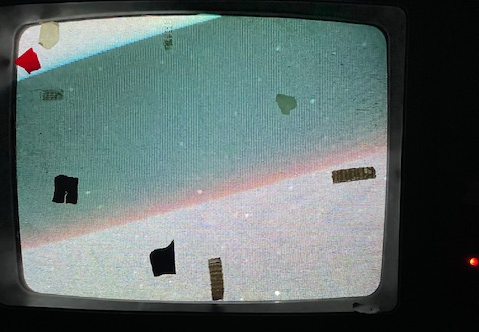
When the target is centered, the finder TV shows this field:
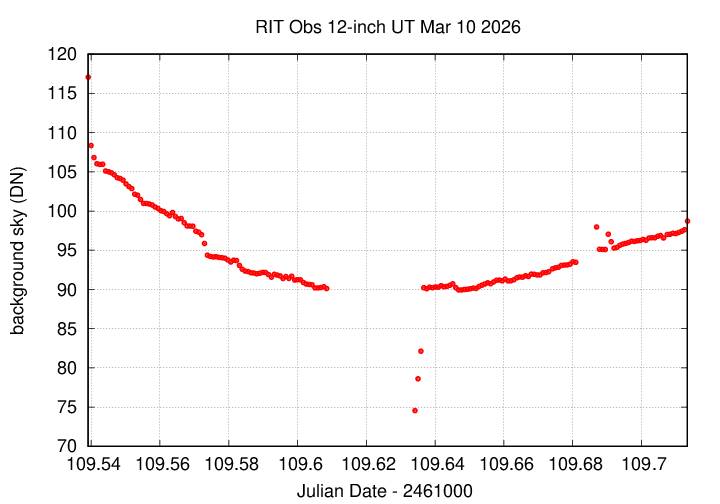
Here's the sky background over the course of the run. No sign of clouds. The low points after the big break are due to partial occulation by the dome slit, and the high points after the small break are probably due to camera having heated up when MaximDL froze.
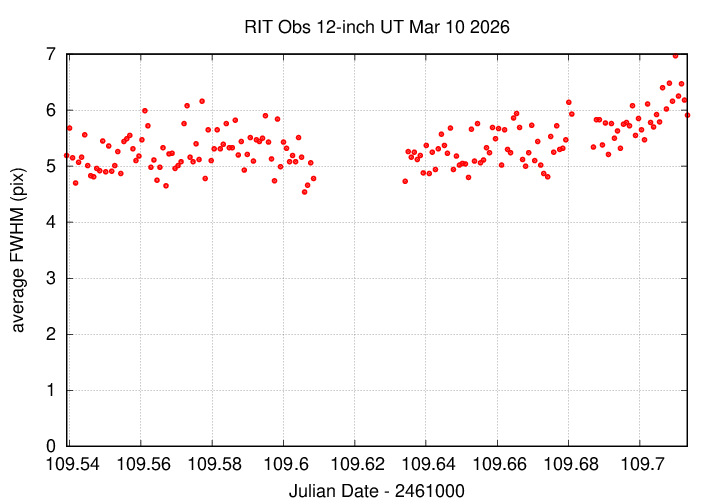
The FWHM got worse as the object started to set in the west.
The graph below shows changes in the photometric zeropoint of an ensemble solution of the instrumental magnitudes over the course of the run. Again, no sign of clouds (or bad guiding), just an increase with airmass near the end.
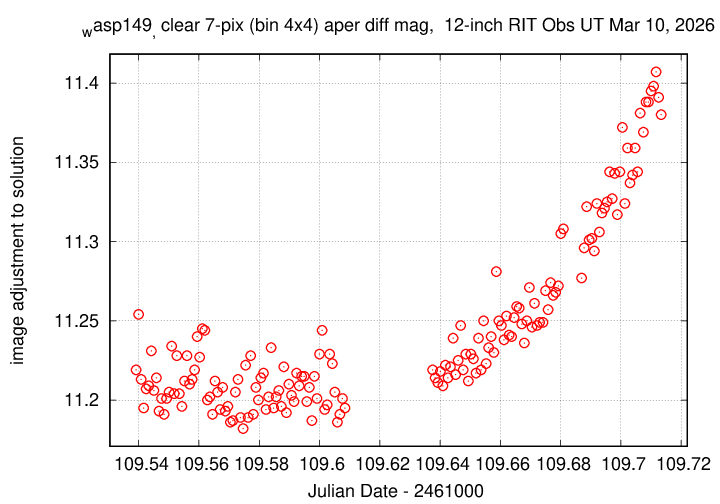
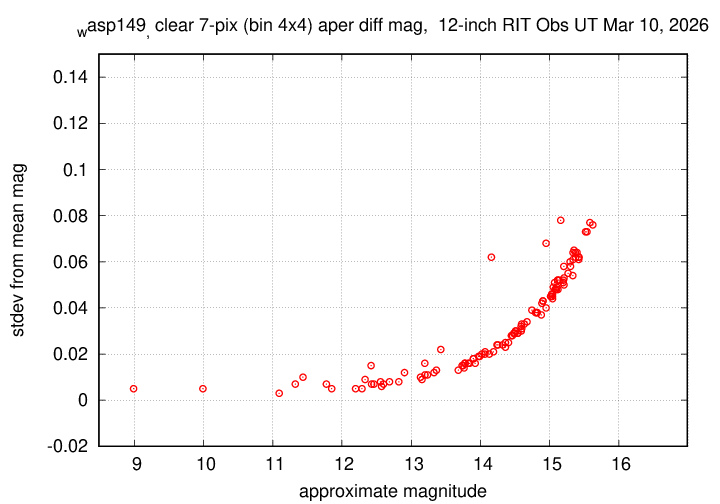
Using aperture photometry with a radius of 7 pixels in clear filter (binned 4x4, each pixel is 1.036 arcsec, so a radius of 7.3 arcsec), I measured the instrumental magnitudes of a number of reference stars and the target. Following the procedures outlined by Kent Honeycutt's article on inhomogeneous ensemble photometry, I used all stars available in each image to define a reference frame, and measured each star against this frame.
Sigma-vs-mag plots show that the floor was about 0.005 mag, rising to 0.010 mag at V ~= 13, and 0.020 mag at V ~= 14.
The measurements show the dip due to the transit clearly, but also reveal how ill-timed the two interruptions were.
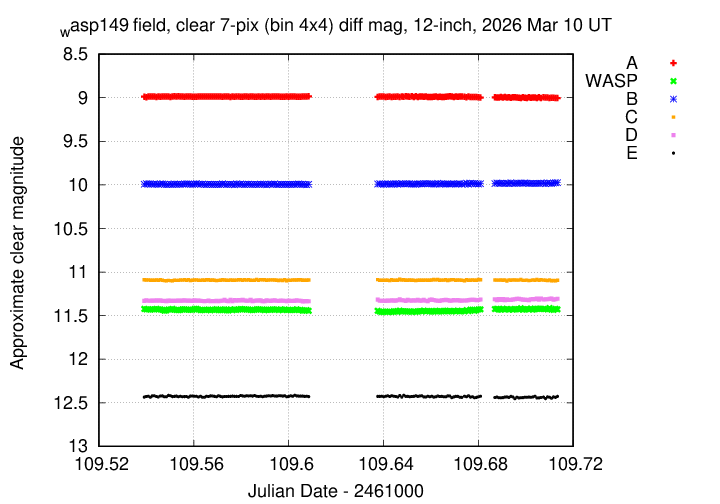
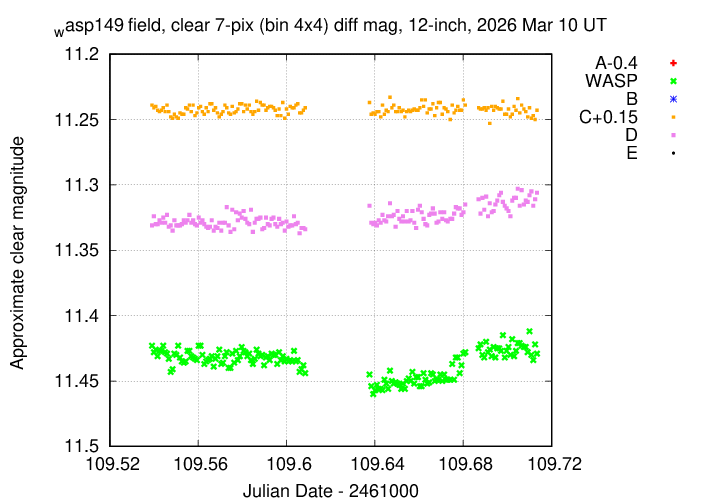
Note that the star "D" is somewhat redder than the other comparison stars in the field; I believe that explains its gradual shift in differential magnitude as the field moves lower in the west. By the end of the observations, the altitude of the telescope was just 25 degrees, corresponding to an airmass of 2.37.