On the night of Apr 14/15, 2026, under what began as very good conditions, but turned to bad ones, I attempted to collect data on the host of a transiting exoplanet for our Observational Astronomy course:
The weather was wonderful at sunset: unseasonably warm, with a very gentle breeze, and clear, dark blue skies. I wasn't planning to work tonight, as the earlier forecast showed clouds for most of the night, but I was persuaded by the beautiful skies to give it a try.
To make a long story short, just as the transit of WASP-104 was scheduled to start, clouds arrived. They were light at first, and I continued to acquire images, since the breaks were large and frequent, but eventually I had to quit. When I examined the data the night morning, I discovered that the clouds had come at just the wrong time, increasing the scatter in the measurements to the point that the transit was hidden.
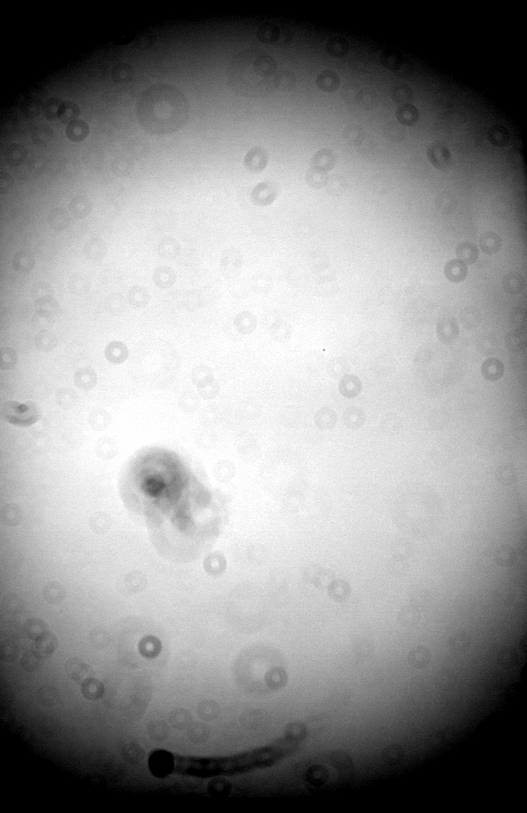
One important note: at the start of the night, flatfields in the "clear" filter showed a big dust double-donut not far from the center of the field, around 7 o'clock in the left-hand image below.
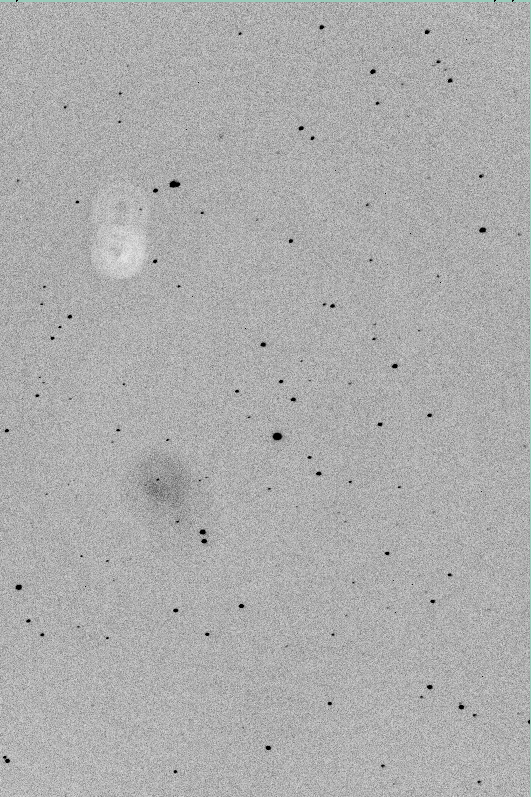
The dust remained in place through image 31, but then, before image 32, it apparently migrated across the filter to a new location, at around 10 o'clock. After flatfielding, this led to positive residuals at the old location, and negative residuals at the new location; see the right-hand image below.
Note that the original location was very close to the target star, which is the upper of the tight pair just below the original location.
I really need to open the camera and clean out whatever dust or other stuff is sitting on the "clear" filter (and other filters, too).