>        UT June 22, 2014  5:00:39
>
132a136,138 >
>         2456830.70878
>
133a140,142 >
>         30 seconds
>
134a144,146 >
>         Clear
>
136a149,151 >
>       (107, 42)
>
180a196,198 >
>       184.9   15.8
>
206a225,227 >
>        similar, but with smaller stdev
>
258a280,282 >
>      the master frame is smoother and less noisy
>
272a297,299 >
>         mean 184.1   stdev 13.7
>
274a302,304 >
>         mean about the same, stdev slightly smaller
>
311a342,344 >
>         mean 208.3   stdev 135
>
313a347 > mean slightly larger, stdev MUCH larger due to hot pixels 361a396,398 >
>       brighter near center, both large and small "donuts" due to dust
>
416a454,457 >
>       the master flatfield is less noisy, and the shadows are
>             much more clearly defined
>
550a592,594 >
>        reasonable values are roughly  5, 10, 20
>
561d604 < <
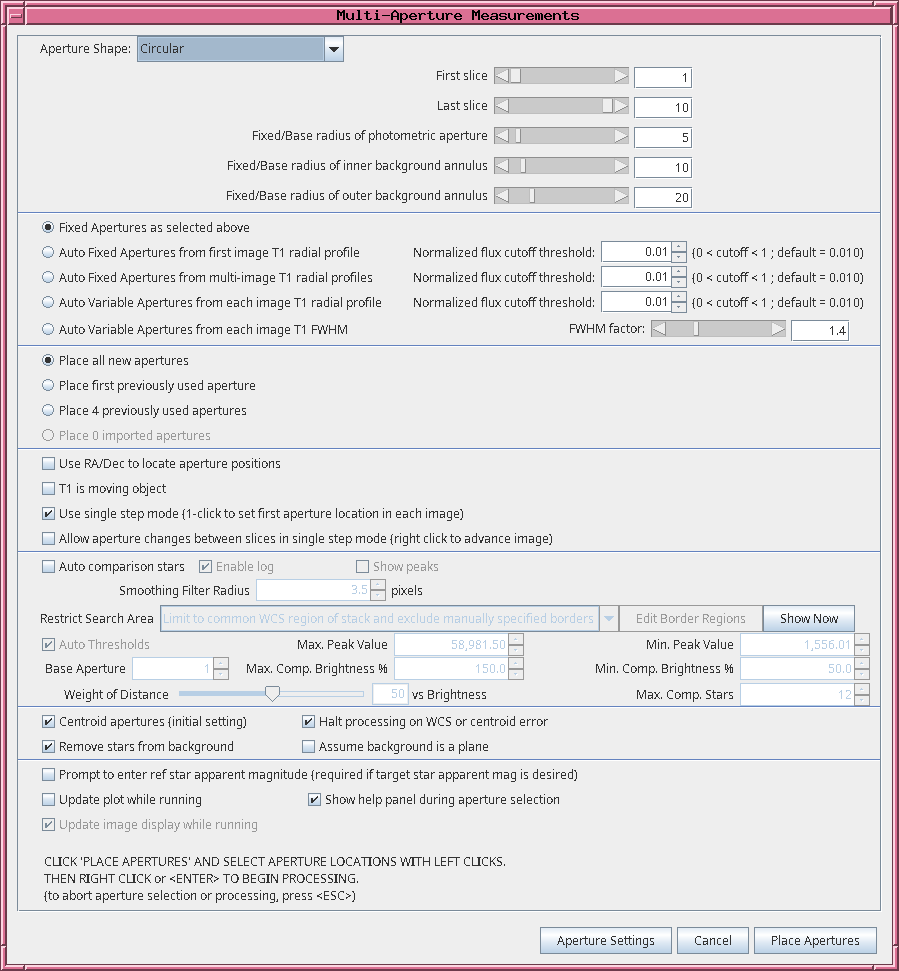 568,569c609
< the three boxes near the top of the window
< (the ones labelled "Fixed/Base radius ...").
---
> the three boxes at the top of the window.
572,574c612
< Next, make sure that the checkboxes
< and radio buttons
< match the values shown
---
> Next, make sure that the checkboxes match the values shown
633c671
< enter "10" into the "Count" box (labelled "Number of images" in some version)
---
> enter "10" into the "Number of images" box,
637,638d674
< You can move the horizontal slider bar under the image to the left or right
< to display different images in the sequence.
686,687d721
< All you have to do is left-click on the star "T1" in each image,
< and AIJ will do the rest.
785a820,821
>
568,569c609
< the three boxes near the top of the window
< (the ones labelled "Fixed/Base radius ...").
---
> the three boxes at the top of the window.
572,574c612
< Next, make sure that the checkboxes
< and radio buttons
< match the values shown
---
> Next, make sure that the checkboxes match the values shown
633c671
< enter "10" into the "Count" box (labelled "Number of images" in some version)
---
> enter "10" into the "Number of images" box,
637,638d674
< You can move the horizontal slider bar under the image to the left or right
< to display different images in the sequence.
686,687d721
< All you have to do is left-click on the star "T1" in each image,
< and AIJ will do the rest.
785a820,821
> 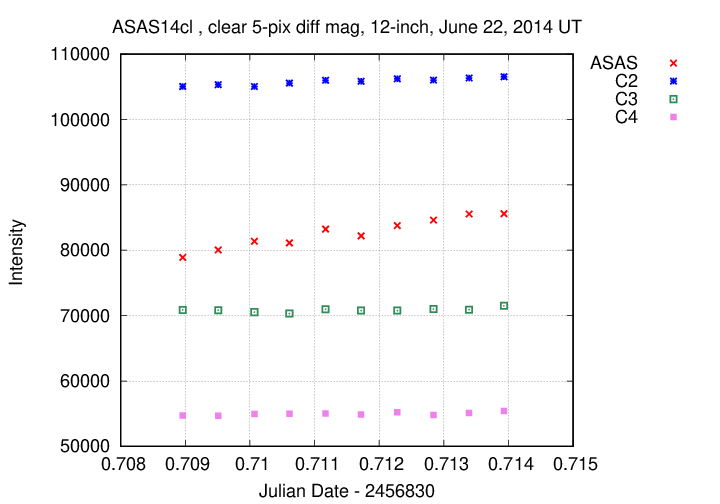 >
793a830,831
>
>
793a830,831
> 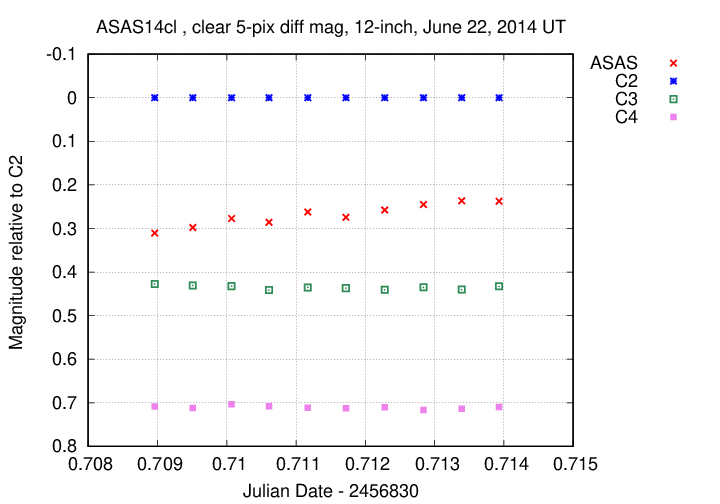 >
798a837,847
>
>
798a837,847
> > Star RA Dec B V > ---------------------------------------------------- > C2 21 54 59.24 +26 39 11.9 12.632 11.863 > > C3 21 55 20.24 +26 44 32.2 13.203 12.335 > > C4 21 54 54.47 +26 44 34.9 13.192 12.555 > --------------------------------------------- >> 806a856 >
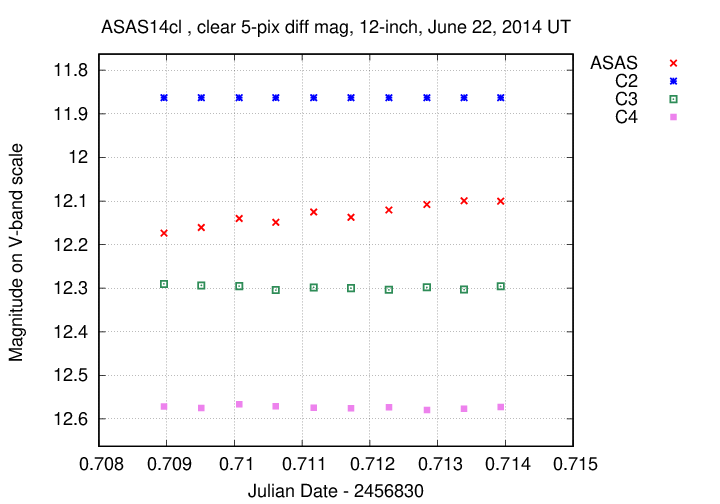 845d894
<
858a907
>
845d894
<
858a907
> 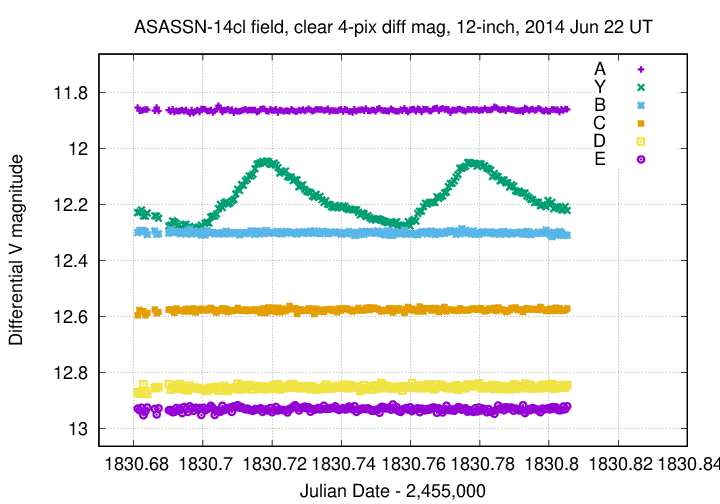 860a910,912
>
860a910,912
> > period is about 0.06 days = 1.44 hours = 86 minutes >863a916,926 >
> This is a cataclysmic variable star, consisting of a white dwarf > and an ordinary star circling each other in a tight orbit. > When material from the outer atmosphere of the ordinary star > is pulled off, it forms an accretion disk around the > white dwarf and shines very brightly. >> One good source describing this object is > Survey of period variations of superhumps in SU UMa-type dwarf novae. VII. The seventh year (2014-2015). > See section 3.40 in particular. >